Showing posts with label Iweala Uzodinma. Show all posts

Tuesday, April 03, 2012

A bookish look at the World Bank President nominees

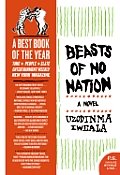
Who would have thought that there would be so many Rights Readers angles to the appointment of a World Bank President? At first I thought the hook was a movement to draft Nobel Prize Winner and guru of microfinance, Muhammad Yunus, (Banker To The Poor). But, he politely demurred. But then I read that the Nigerian Finance Minister Ngozi Okonjo-Iweala is seeking the position. Her son, Uzodinma Iweala, is the author of a novel we read, Beasts of No Nation. The Economist has strongly endorsed her candidacy,
Ms Okonjo-Iweala is an orthodox economist, which many will hold against her. But if there is one thing the world has discovered about poverty reduction in the past 15 years, it is that development is not something rich countries do to poor ones. It is something poor countries manage for themselves, mainly by the sort of policies that Ms Okonjo-Iweala has pursued with some success in Nigeria.
And then there is President Barack Obama's nominee, Jim Yong Kim. Mr. Kim, currently the President of Dartmouth College, is a co-founder of Partners in Health along with Paul Farmer. We learned about their innovations in global public health when we read Tracy Kidder's Mountains Beyond Mountains. If you have the time, this lecture on global health from a couple years ago is a nice introduction to Jim Kim, or check out this Bill Moyers interview to find out, among other things, what insights his unusual background in medicine and anthropology might bring to the culture of the World Bank,
BILL MOYERS: You are trained as an anthropologist too, as well as in medicine. What do you think the eye of an anthropologist sees, that a physician on his or her own might not see?

DR. JIM YONG KIM: Well, I think that in medicine, what we're trained to do is to look for patterns, to build order out of great complexity, out of very subtle signs and symptoms, and then have a plan where you can act. Anthropologists are a little bit different, we don't often act on what we do. So I'm sort of in the middle now. I do the ethnography, to try to get a sense of what the culture is. 

You know, if you want to know what anthropologists do, one of my great professors, Sally Falk Moore once said, it's very simple. You walk into a room and you say, "Who are these people and what do they want?" So if you're constantly asking that question, over time, you build up a sense of how a particular social system works. That's always what we've done. Paul Farmer's also an anthropologist, we've done this together for many, many years.

What is it that we need to do to actually change policy around HIV treatment or drug resistant TB treatment? And that anthropological piece of it, linked to a physician's approach to solving a problem and putting a solution on the table, taking people through difficult times-- That's been a very good combination for me.
Both Mr. Kim and Ms. Okonjo-Iweala would be ground-breaking appointments. It should be exciting to see where the World Bank goes from here.

Friday, February 05, 2010

Round-Up: Familiar Authors in Unfamiliar Places

Snow Flower and the Secret Fan: A NovelIn our latest round-up, we find many of our authors stretching their wings in new genres and finding new audiences:
  • Film critic Roger Ebert is a fan of W.G. Sebald and shares some video tributes on his blog. Check out the one from the architecture students for an Austerlitz flashback.
  • John Conroy (Unspeakable Acts, Ordinary People) has converted his investigation of allegations of the use of torture by Chicago police officers into a play.  He described it for the NYT, “I wanted to indict the whole city of Chicago.”
  • Louise Erdrich (Tracks) will participate in the PBS series Faces of America which explores the genealogical histories of a dozen prominent Americans.
  • At the New Yorker, you can hear Junot Diaz read and discuss Edwidge Danticat's story "Water Child" and Danticat discuss Diaz' "The Dating Game."
  • The photographer Pieter Hugo has published a collection of photographs, Nollywood, about the Nigerian film industry.  Chris Abani (Graceland) and Zina Saro-Wiwa, daughter of Ken Saro-Wiwa supply the text.  Preview this striking collection here.
  • Orhan Pamuk (Snow) explains how his latest book, The Museum of Innocence, lead him to curate an actual museum and the NYT provides a slideshow of some of its holdings.  Want more Pamuk? How about a stroll with him through downtown LA?: "I like it when there is history, when there is decay. I'm very much impressed that this city has a decaying face. I identify it with my own." And then compare that to Istanbul.  Not juicy enough?  How about this literary match: ‘No secret, Kiran’s my girlfriend’. 
  • Finally, remember our exploration of afropop legend Fela Kuti when we discussed Uzondinma Iweala's Beasts of No Nation?  Kevin Mambo, star of the Broadway musical "Fela!" and Larry Cox, Amnesty International USA's Executive Director discuss the musician's commitment to human rights (and Obama's Nobel speech) on WNYC. More from NPR here.

Saturday, October 14, 2006

Reflecting on Beasts of No Nation

Guest Post!!! I'm going to leave the last word on child soldiers before our non-virtual discussion on Sunday to one of our Esteemed Readers (Stevi). What might happen to Agu after the novel ends? Here's a possible answer:
Reading Beasts of No Nation by Uzodinma Iweala once again, reminds me of Ibrahim and Garbo. Even though the students where I taught brought more than 60 first languages with them, few of our students came from Africa.

Ibrahim was 19 when he arrived at our school from Sudan. He was tall, light skinned and soft spoken. Many USA students confuse the African continent with a single country and so one day, Ibrahim agreed to talk with our world history class about his country. On the large map tacked to the wall, he showed Sudan on the eastern side of Africa and told about what it looked like and his family there. Then quietly he mentioned war. The simple words slipped through his lips, “I was a soldier for five years.” My gaze traveled from Ibrahim’s face to those of my other students, and I could see the gleam of excitement like Agu had felt after watching war movies but before he experienced war on the ground.

A hand flew up and the question burst forth, “Did you ever kill anyone?” Tension filled our room. Ibrahim’s soft face clouded up, his jaw set and pain filled his eyes. I told him that was not a question he needed to answer. Now I don’t remember how we moved from his story back to our history text.

Shortly after this, I received a withdrawal notice for Ibrahim. When I asked the counselor what had happened, she told me Ibrahim didn’t believe high school was the place for him. He didn’t like being around all of the kids, and he wanted to work for money. He’d had to leave that teeming teenage environment.

Garbo arrived from Liberia during that country’s second civil war. He was 14, still growing, muscular, also soft spoken, and dark as a night without moon or stars. He joined his father who had left Liberia, his wife, two sons and at least one daughter when Garbo was less than a year old. Garbo had not seen him since then. In the States, Garbo’s father had acquired a new woman, an African-American, and had another son. He had come to the USA to go to college.

Because Liberia is an English speaking nation, Garbo was not put in an ESL class despite the reality that listening to him speak English was like listening to a foreign language, and I was never sure how much he understood. As Agu explains what he sees, feels and experiences in the novel, I could see Garbo talking with me. At least twice he stayed after school to talk for 45 minutes to an hour. Fortunately, I had just read an extended article about Liberia and her civil wars. As he recounted what he’d seen, soldiers, violence, cannibalism, his injured finger smashed under a rock, I could put the pieces together and wonder if in fact he had witnessed all of this, or like me, simply knew about it.

The social part of high school was hard for him. His dark skin caused the African-American kids to taunt him and call him “black shit.” When he came to me for help, I went to our African-American dean and asked her to intervene with preventative measures. She didn’t until Garbo finally lashed out and got into a fistfight in the locker room in gym. Another time when the kids would not stop harassing him, he just stopped, looked at them, and quietly said, “In my country, I would just kill you.” He finally made friends with the Latino boys he played soccer with, and it was a Latino family that took him in when his father and the son his father had with the African-American woman moved to Texas and did not want to take him along.

On his final day of high school right before graduation, he came to my room to thank me. As he hugged me, his body shook with sobs and tears of joy washed down his face. I think he was going to the junior college and would play soccer for them. A few years later, he stopped by school to give me a stuffed toy for my granddaughter and a photo of his son, a boy he had with an African-American woman without benefit of marriage. As I looked at the photo, I wondered about what will happen to this child of an African-American and an African. Will he be free of the dangers of war, or will he be lured into gang life and the war of the streets?

When I think of them, I send love and healing to Ibrahim and Garbo wherever they may be.

Friday, October 13, 2006

Afrobeat and Beasts of No Nation

Time for your Beasts of No Nation soundtrack! Well, it turns out there really is one. The epigraph for the novel is a quote from Fela Kuti, the founding father of Afrobeat-- "This uprising will bring out the beast in us"-- and the title of the book also corresponds to a 1989 Fela Kuti recording: Beasts of No Nation, so a little exploration is in order. No samples at link above, though there's a bit at the end of this BBC Radio profile of Fela, but you can find lyrics for the song here.

A profile of Fela from National Geographic World Music describes the musician's contributions to African music as well as his political activism,
Singing neither in Yoruba nor the King's English, Fela delivered his musical jeremiads in pidgin English, so as to reach as wide an audience as possible. And he was loved for it by the masses, who made him a star. But his broadsides against the corruption and of General Olusegun Obasanjo's military government made him some enemies in very high places, and he suffered repeated harassment, including a full scale attack on his Lagos compound (which he called "The Kalakuta Republic") in 1977. Over 1,000 soldiers set fire to the premises and beat anyone they could lay their hands on, including Fela's 82-year-old mother, who was thrown from a window and later died from her injuries. Fela himself suffered fractures in his skull, arm and leg. In his lifetime Fela would undergo 356 court appearances and three separate imprisonments, including a 1985-87 sentence on trumped-up currency charges that made him a poster boy for Amnesty International.
To round out our Beasts soundtrack, Fela's son Femi Kuti, also a musician/activist, is a contributor toth Afrobeat Sudan Aid Project. You can view a video promotion for the project here. And you might want to check out Ceasefire from Emmanuel Jal, a former child soldier from Sudan, now a spokesperson for the Campaign to Stop the Use of Child Soldiers. Finally there is Uganda musician Samite's Embalasasa-- NPR profile and samples here. This is the one most appealing to me musically, perhaps because the focus of the album is music as a "weapon of healing" for child soldiers.

Tags: , ,

Wednesday, October 04, 2006

Child Soldiers: Amnesty Resources

Continuing our exploration of Uzodinma Iweala's Beasts of No Nation, we explore some supplemental information about child soldiers:

Amnesty has a number of resources on this issue, beginning with this rundown of press releases.  Check out these more visual features: A flash animation about Children at war in the DRC, a slideshow (opens with soundtrack) about "Night Commuter" children in northern Uganda who walk from their home villages to sleep in cities or in camps for internally displaced persons because they fear abduction into the Lord’s Resistance Army (accompanying action for children and youth here). And my favorite: The Story in Pictures - Drawings by Child Soldiers.

In addition, Amnesty is a member of the Coalition to stop the use of Child Soldiers.

More resource links in the next few days...

Tags: ,

Sunday, October 01, 2006

Our October Author: Uzodinma Iweala

This month we offer multimedia introductions to Uzodinma Iweala, author of Beasts of No Nation.

First, a short video from WGBH (I couldn't import this to the blog -- Warning!-- It will start playing as soon as you click).  One might hope for a better interviewer, but at least one is impressed with the author's youth.  A more in depth audio interview is available from KCRW's Bookworm.  And finally, a print interview from The Morning News by Robert Birnbaum. Excerpt,
RB: Let’s talk about Beasts of No Nation. Why did you want to write this book?

UI: I guess it was really wanting to understand what the experiences of being a child soldier—which is an odd thing to say because you can’t really understand it unless you have been one. But wanting to have deeper understanding and not just—you read newspaper articles and you hear things on the news and see pictures and [say], “Oh, wow, that’s sad.” And then you move on, you know? Every so often in your life something happens and you say, “I can’t move on from this. This isn’t something I can just put to the side and say, ‘This is happening to people and I have other things to do in my existence.’” It doesn’t work like that sometimes. Those people who really contribute to society are the ones who do that all the time. They say, “This is a problem and we are not going to brush this problem aside.” So I guess, for me it was just a small step in saying, “OK, I have seen this and I can’t brush this aside. So let me take this small step to learn more and more about it.”
The contents of this author essay from Powells paralells that of the essay printed in the back of the paperback edition of the book...only written in the style of the novel, and may be of interest to those who read other editions or enjoy the cleverness of the presentation. 

Tags: ,

Monday, June 19, 2006

For October: Beasts of No Nation


For October, we have selected Uzodinma Iweala's Beasts of No Nation. (This book will be out in paperback in August.)
In this stunning debut novel, Agu, a young boy in an unnamed West African nation, is recruited into a unit of guerrilla fighters as civil war engulfs his country. Haunted by his father's own death at the hands of militants, which he fled just before witnessing, Agu is vulnerable to the dangerous yet paternal nature of his new commander.

While the war rages on, Agu becomes increasingly divorced from the life he had known before the conflict started — a life of school friends, church services, and time with his family still intact. As he vividly recalls these sunnier times, his daily reality spins further downward into inexplicable brutality, primal fear, and loss of selfhood. His relationship with his commander deepens even as it darkens, and his camaraderie with a fellow soldier lends a deceptive sense of normalcy to his experience.

In a powerful, strikingly original voice that vividly captures Agu's youth and confusion, Uzodinma Iweala has produced a harrowing, deeply affecting novel. Both a searing take on coming-of-age and a vivid document of the dark face of war, Beasts of No Nation announces the arrival of an extaordinary new writer.

Friday, April 28, 2006

Rights Readers Guide to the Los Angeles Festival of Books

This weekend some of our loyal Readers may be attending the Los Angeles Times Festival of Books. Here's a little guide to Rights Readers authors past and future (?) you may want to check out:

On Saturday  Adam Hochschild (King Leopold's Ghost, Bury the Chains) appears in the "Writing Epic History" panel at 10:30 AM.  The "First Fiction" panel at 11:30 has two potential Rights Readers authors in Olga Grushin (Dream Life of Sukhanov) and Uzodinma Iweala (Beasts of No Nation).  At 12:30 Lost Boys Alephonsion and Benson Deng share their experience of Sudan, another possible future read.  And at 4:00 PM the "Fiction: Unknown Territory" panel includes Lisa See (who I'm sure we will get around to one of these days), author of Dragon Bones and Snow Flower and the Secret Fan, and Amy Wilentz (Martyr's Crossing).  The 4:00 PM panel "Under Siege: Life in a Culture of Conflict" includes Loung Ung, a Cambodian genocide survivor, whose previous appearance was praised by one of our Esteemed Readers, and I have to admit one of her books is sitting in my "to read" pile.  Wow!  Looks like this is a Rights Readers day!

On Sunday Amy Wilentz is back moderating a fiction panel featuring Chris Abani (Graceland) at 10:30 AM and he appears again at 3:00 PM. 

Reports on these authors or others I may be neglection are appreciated!
Related Posts Plugin for WordPress, Blogger...