To learn more about children's rights, please visit Amnesty International's FAQ on the Convention on the Rights of the Child and while you're at the site, take action on behalf of Syrian children.
Wednesday, November 20, 2013
Read for Rights on International Children's Day
To learn more about children's rights, please visit Amnesty International's FAQ on the Convention on the Rights of the Child and while you're at the site, take action on behalf of Syrian children.
Tuesday, November 19, 2013
For January: In the Shadow of the Banyan by Vaddey Ratner
For seven-year-old Raami, the shattering end of childhood begins with the footsteps of her father returning home in the early dawn hours bringing details of the civil war that has overwhelmed the streets of Phnom Penh, Cambodia’s capital. Soon the family’s world of carefully guarded royal privilege is swept up in the chaos of revolution and forced exodus.
Over the next four years, as she endures the deaths of family members, starvation, and brutal forced labor, Raami clings to the only remaining vestige of childhood—the mythical legends and poems told to her by her father. In a climate of systematic violence where memory is sickness and justification for execution, Raami fights for her improbable survival. Displaying the author’s extraordinary gift for language, In the Shadow of the Banyan is testament to the transcendent power of narrative and a brilliantly wrought tale of human resilience.
Sunday, November 17, 2013
Eyes on Nigeria: Human Rights Supplement to Transwonderland

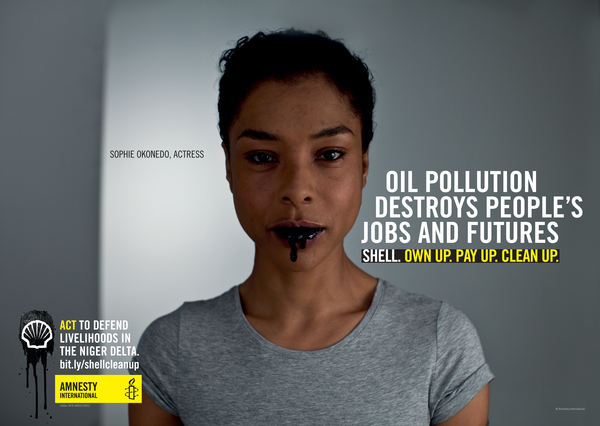
This month we are travelling to Nigeria via Noo Saro-Wiwa's Looking for Transwonderland. While we are on tour, one stop definitely needs to be Amnesty International's Eyes on Nigeria website, particularly the interactive map which documents the location of oil spills, forced evictions, police brutality incidents and more. Also worth checking out are Amnesty's 2011 report The True 'Tragedy': Delays and Failures in Tackling Oil Spills in the Niger Delta and a press release from this month: Shell’s false claims on Niger Delta oil spills exposed,
A new report published today uncovers specific cases in which Shell has wrongly reported the cause of oil spills, the volume of oil spilled, or the extent and adequacy of clean up measures.Another important report regarding forced evictions was released this past August: If You Love You Life, Move Out! NIGERIA: Forced Eviction in Badia East, Lagos State,
"Shell is being disingenuous about the devastation caused by its Niger Delta operations. This new evidence shows that Shell's claims about the oil spills cannot be trusted," said Audrey Gaughran, Director of Global Issues at Amnesty International.
New analysis from an independent expert found that so-called official investigation reports into the cause of oil spills in the Niger Delta can be "very subjective, misleading and downright false."
The report highlights systemic weaknesses in the way the cause of a spill and the volume are determined - with some significant errors in the volumes that are recorded as spilled.
The consequences for the affected communities are devastating and can result in them receiving little or no compensation.
By the end of the demolition, the Oke Ilu-Eri community, which forms part of Badia East, was razed to the ground and a part of the nearby Ajeromi community was also destroyed. At least 266 structures that served as homes and businesses were completely wiped out, affecting an estimated 2,237 households. Ataminimum, close to 9,000 people were affected. No alternative housing was provided by the Lagos state government and people were left homeless after the demolitions.Finally, here is a short documentary about the oil spill issue. It contains a brief appearance by Ken Saro-Wiwa, Jr., Noo's brother.
The Transwonderland Tour
Reading a travel book like Noo Saro-wiwa's Looking for Transwonderland: Travels in Nigeria is time-consuming, not because it's a difficult read but you need to keep a computer handy because you want to look for pictures or videos of the sights she describes. Of course the first thing I wanted to search out was pictures of the decrepit amusement park Transwonderland, but I kept getting directed to the wonderful book cover illustration by Rod Hunt, so that will have to do.
I did find the video above, offering up the fantastically colorful pageantry of the Durbar Festival in Kano. We here at Rights Readers love a parade and this looks every bit as exciting as what Pasadena has on offer with bonus points for the elegantly costumed horses. (You might want to jump ahead 2-3 minutes into the video to avoid a long credit sequence.) A couple of World Heritage sites are mentioned in the book. Here's the UNESCO website for the Sukur Cultural Landscape and the Osun-Osogbo Sacred Grove.
And just to balance the picture with a little modern day reality, check out Transparency International's country profile of Nigeria, where among other fun facts, you'll learn that 63% of Nigerians reported paying a bribe in 2010. I'll share more on human rights concerns in Nigeria in my next post.
Saturday, November 16, 2013
Our November Author: Noo Saro-Wiwa
Spending time in Nigeria left her deeply, indelibly impressed by her father's achievements, she says. "It's such an incredibly tough country, just to live in. You see how people struggle. The skills you need merely to survive there … It's just so much more difficult than in the UK. So to truly see what my father achieved, from such a disadvantaged background economically and ethnically, and the challenges he took on over and above that – facing down a massive oil multinational, a military dictatorship. I knew he was brave, but only now do I really understand just how monumental it was, what he did."
What was it like to grow up with such a politically active and socially conscious father? How do you come to terms with your father's imprisonment and execution? How do you cope with the endless international press speculation about your father's life and character? And how do you respond when international attention is focused on you? How do you make your own way in life against your father's expectations of you, especially when you carry the same name? How do you live with such a complex personal history? This frank and memorable depiction of Ken Saro-Wiwa's childhood and relationship with his father vividly recounts the journey he took to answer those questions.Here's an interview with Ken about the book:
I don't want to leave out sister Zina out either. Get to know this young filmmaker at her home page zinasarowiwa.com. Check out some of her short experimental films, try The Deliverance Of Comfort which shares some concerns found in Transwonderland or Phyllis which she describes as "alt-Nollywood."
Definitely a lot of talent in the family (Papa would be proud!) and we're looking forward to keeping an eye on their future projects!
Wednesday, November 13, 2013
Rights Reel: Nollywood Babylon and more
Saturday, October 19, 2013
Our October Author: Luis Alberto Urrea
For those who prefer print, this Powell's interview has lots of great insights into the book's humor,
Somebody said to me about a week ago, "You've invented a genre which I call slapstick immigration." I thought that was hilarious, because I hadn't thought of it that way. But I like it.Bookslut also has some great stuff,
Here's what I think: I, of course, write about the border because I'm from the border. Others who are not from the border, write these books about the border that are more like "my day at the zoo," books filled with little brown people running amuck. They write without sensitivity; they certainly don't write with any love of the place. That sort of thing bothers me.
I've been accused of being a Polyanna by some of those very writers. Yes, everyone knows it's hell at the border, but it's not hell all the time; that's where my grandmother lives!There's more to share about Luis Urrea, but I'll save it for other posts. Just a brief reminder here though-- be sure to check out Amnesty International's 'Immigrant Rights are Human Rights' page and this fresh Urgent Action concerning Mexican community activists to round out our consideration of this warm-hearted novel.
Labels:
Big Read,
Into the Beautiful North,
Luis Alberto Urrea,
Mexico,
NEA
Subscribe to:
Posts (Atom)